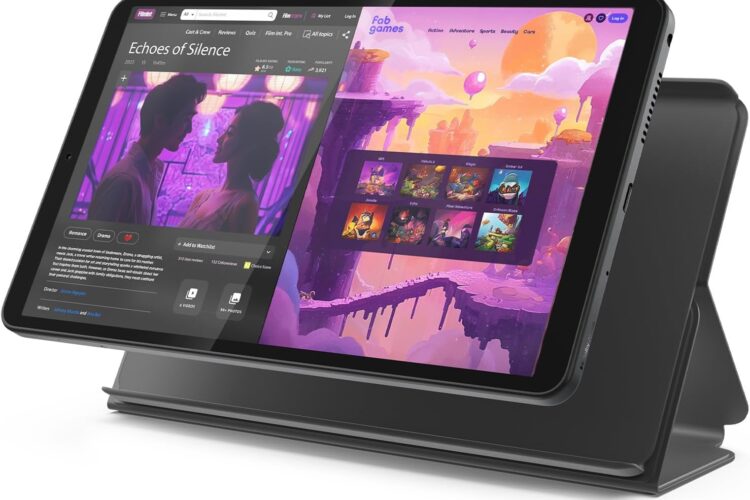
Here is the full long-form article:
Lenovo Tab One: A Practical Look at an Everyday Lightweight Tablet
In a market flooded with tablets at every price point and size, finding one that genuinely fits your everyday needs — without paying for features you’ll never use — is harder than it sounds. The Lenovo Tab One positions itself as exactly that kind of device: a lightweight, straightforward tablet designed for real daily use, not for spec sheet bragging rights.
With an 8.7-inch HD display, a MediaTek Helio G85 processor, 4GB of RAM, 64GB of storage, and an included folio case, this tablet is built around a clear philosophy — give people what they actually need, keep it light, and make the battery last. Lenovo even quotes up to 12.5 hours of YouTube streaming, which is a surprisingly specific and telling claim. It suggests the device was designed with a real-world usage pattern in mind, not just a laboratory benchmark.
This article takes a thorough, honest look at what the Lenovo Tab One offers, who it’s likely to serve well, where its limitations lie, and how it compares in a broader context. Whether you’re buying for yourself, a child, an elderly parent, or simply looking for a secondary screen for travel or leisure, the information here should help you arrive at a clear, confident decision.
Key Features of the Lenovo Tab One
8.7-Inch HD Display
The display is the part of any tablet you interact with most directly, so it’s worth understanding what “HD” actually means at this screen size. The Tab One’s 8.7-inch panel delivers HD resolution, which produces a pixel density that’s comfortable for reading text, watching video content, and browsing the web without obvious pixelation.
At 8.7 inches, the screen hits a useful middle ground. It’s meaningfully larger than a smartphone, which makes reading, watching, and navigating far more comfortable for extended sessions. At the same time, it’s compact enough to hold in one hand without strain and fits easily into a bag. This size tends to work particularly well for people who want a portable screen but find larger 10 or 11-inch tablets cumbersome to carry around.
The display isn’t a high-refresh-rate panel or a ProMotion screen — scrolling won’t have the buttery fluidity of more expensive devices. But for its intended use cases, the screen renders content clearly and adequately. Watching YouTube videos, reading articles or eBooks, and video calling all work well within what this display provides.
MediaTek Helio G85 Processor
The MediaTek Helio G85 is a well-established mid-range chip that appears across a range of budget and mid-tier Android devices. It’s based on a 12nm manufacturing process and includes two Cortex-A75 performance cores and six Cortex-A55 efficiency cores, paired with a Mali-G52 GPU.
In practical terms, this means the Tab One handles general use tasks — streaming, web browsing, social media, messaging, light productivity — smoothly and without frustrating lag. It’s not a chip designed for heavy 3D gaming or running demanding applications simultaneously, but within the everyday usage spectrum it was designed for, it performs with reasonable consistency.
The G85 also supports certain gaming optimizations built into its architecture, so casual gaming — puzzle games, card games, light action titles — is well within its capabilities. Graphically demanding games may experience reduced frame rates or require lowering visual settings, but that’s an expected trade-off at this tier.
4GB of RAM
4GB of unified memory is the baseline for a functional Android tablet experience in 2025. It’s enough to keep a handful of apps active in the background without constant reloading, maintain a browsing session alongside a media app, and handle everyday multitasking without excessive slowdown.
Where 4GB begins to feel constrained is under sustained heavy multitasking — running several large apps simultaneously, switching rapidly between memory-intensive processes, or using more demanding software. For a tablet whose primary role is consumption and light productivity, this is rarely the bottleneck it might seem on paper. Android’s memory management has also matured significantly, meaning 4GB goes further today than it did on systems from several years ago.
64GB Internal Storage
64GB is a practical baseline for most users. It comfortably accommodates the Android operating system, a reasonable library of apps, a collection of downloaded videos or music for offline use, and a moderate photo or document collection.
The storage question usually comes down to use case. If the tablet is primarily used for streaming (where content isn’t stored locally), 64GB is unlikely to feel limiting. If you plan to download a lot of offline content — movies for travel, games with large install sizes, music libraries — you may find yourself managing storage more actively. Checking whether the Tab One supports microSD card expansion is worth doing before purchase, as that would substantially change the storage calculus.
Battery Life: Up to 12.5 Hours of YouTube Streaming
This is one of the headline features and it’s worth examining carefully. Lenovo’s claim of up to 12.5 hours of YouTube streaming is more grounded than the abstract “video playback” figures many manufacturers use. YouTube streaming involves maintaining a wireless connection, decoding video continuously, and running the display at a reasonable brightness — it’s a legitimate real-world test.
In practice, actual battery life will vary depending on screen brightness, Wi-Fi signal strength, background activity, and content type. Gaming or processor-intensive tasks will drain the battery faster. Light reading or listening will extend it. But the underlying point — that this tablet is designed to last a full day of moderate use without charging — appears well supported by its hardware design.
For users in situations where outlets aren’t always available (classrooms, commutes, travel, outdoor settings), long battery life isn’t a minor convenience — it’s a meaningful quality-of-life feature.
Included Folio Case
One detail that often gets underappreciated is the inclusion of a folio case in the box. Folio cases serve multiple functions: they protect the tablet from bumps and scratches, they extend the useful life of the device, and they typically fold into a stand for hands-free viewing — useful when streaming video at a desk, on a kitchen counter, or while traveling.
The fact that this is included rather than sold separately is genuinely useful from a practical standpoint. Budget tablets often end up costing more than their list price once accessories are factored in. The Tab One bundles one of the most important accessories directly.
How the Lenovo Tab One Can Be Used
Streaming and Entertainment
The most natural home for this tablet is in a streaming context. Whether it’s YouTube, Netflix, Disney+, Prime Video, or any other major streaming service, the 8.7-inch display and capable battery make it a comfortable companion for watching content. The display size is large enough that watching an episode or a film feels like a proper viewing experience, not a compromise.
For households where the main TV is often occupied, or for bedrooms, kitchens, or travel situations, having a dedicated streaming tablet that doesn’t drain its battery by mid-afternoon is a genuinely useful tool.
Reading and Digital Learning
At 8.7 inches, this tablet is well-proportioned for reading. eBooks, digital magazines, news articles, and PDF documents all render comfortably on screen. For students, the tablet is capable of running Google Classroom, reading assigned materials, submitting documents through common school apps, and participating in video lessons.
The MediaTek Helio G85 handles Google Workspace apps — Docs, Sheets, Slides — without issue. Combined with a Bluetooth keyboard (sold separately), this tablet can serve as a lightweight writing and note-taking station for students who don’t need the full capability of a laptop.
Video Calls and Communication
For families spread across distances, the Tab One makes a reasonable video calling device. Apps like WhatsApp, Google Meet, Zoom, and FaceTime (through browser, for non-Apple users) run smoothly. The larger screen compared to a smartphone makes video calls feel more natural and less strained, particularly for older users who might find small phone screens difficult.
The combination of a manageable size, long battery, and simple interface makes this tablet suitable for grandparents or less tech-savvy family members who primarily want to stay connected through video calls and messaging.
Children’s Tablet for Media and Learning
Tablets in this size and performance range are frequently used as children’s devices, and the Lenovo Tab One has characteristics that fit that use case. The included case provides protection against the inevitable drops and bumps that come with child use. The battery duration means less charging negotiation throughout the day. The display is large enough for comfortable use without being so large it’s unwieldy for smaller hands.
Android’s parental controls, combined with apps like Google Family Link, allow parents to manage screen time, restrict content, and monitor app usage. The 64GB of storage is sufficient for a healthy library of educational and entertainment apps.
Travel Companion
The Tab One’s lightweight design and strong battery life make it a natural travel tablet. For long flights, train journeys, or road trips, a device that can sustain 10 or more hours of video playback means you can load up offline content before a trip and not worry about running out of entertainment. The included case doubles as a stand for table-tray or desk use, which is a practical advantage.
Secondary Work and Productivity Screen
For remote workers or freelancers who work from varied locations, a secondary tablet for reference material, communication, or media playback alongside a primary laptop is increasingly common. The Tab One handles this role without demanding much from the user — it stays on, connects to Wi-Fi reliably, and runs the apps that matter.
Who the Lenovo Tab One May Be Suitable For
Being honest about who benefits most from a device is as useful as celebrating its strengths.
Casual everyday users who primarily stream, browse, and communicate are the core audience for this tablet. If your tablet usage consists of watching shows, reading news, checking social media, and making occasional video calls, the Tab One delivers on all of those without unnecessary complexity or cost.
Students at the primary and secondary level will find it capable for their academic needs. Running school apps, watching educational content, participating in virtual classes, and handling basic assignments are all within its comfort zone.
Parents seeking a children’s tablet will appreciate the durability offered by the included case, the battery life that reduces charging interruptions, and the manageable size. It’s a sensible device to put in a child’s hands without significant anxiety about breakage or battery death.
Older adults or less tech-savvy users often thrive with tablets that don’t overwhelm them. The 8.7-inch screen is large enough to be accessible for those with vision difficulties, and Android’s interface can be customized for simplicity. For video calls, news reading, and entertainment, this tablet provides what’s needed without requiring technical sophistication.
Travelers who want a lightweight, long-lasting entertainment device without the weight or complexity of a laptop will find this a practical companion.
This tablet is probably less suited for:
Power users or professionals who need to run demanding software, edit video, manage large files, or multitask intensively. The hardware simply isn’t calibrated for that kind of sustained demand.
Dedicated gamers who want to run graphically intensive mobile games at high settings. The G85 handles casual gaming well, but pushing the GPU on demanding titles will produce a less smooth experience.
Users needing a laptop replacement for complex creative or technical work. A tablet at this level can supplement a laptop but is unlikely to replace one for professionals.
Important Things to Consider
Storage Management
64GB is adequate for many users, but it fills faster than expected when apps, downloaded content, and offline media accumulate. Before purchasing, it’s worth clarifying whether the device supports microSD card expansion — this single factor can dramatically extend the practical storage ceiling.
Performance Expectations
The Helio G85 and 4GB RAM configuration delivers reliable performance for its intended use cases. Setting realistic expectations matters here: if you’re coming from a high-end smartphone or a premium tablet, the performance difference will be noticeable. If you’re approaching this as an everyday media and light productivity device — which it is — the experience tends to be satisfying.
Display Quality vs. Premium Panels
HD resolution on an 8.7-inch screen is perfectly serviceable for the majority of content. However, if you’re accustomed to the AMOLED or QHD displays on high-end phones or tablets, the visual difference is apparent. Colors are rendered accurately, but without the deep blacks and saturated vibrancy of OLED technology. For most users in the target audience, this isn’t a meaningful drawback.
Software Updates and Longevity
Android tablets in the mid-range category vary in how long they receive software updates. It’s worth checking what Android version the Tab One ships with and what Lenovo’s stated update support timeline is. Software longevity affects both security and app compatibility over time.
Audio Experience
Tablets in this category typically offer functional but not remarkable audio. For solo viewing with the volume turned up reasonably, the built-in speakers are adequate. For more immersive audio, pairing with Bluetooth headphones or a speaker is worth considering.
What the Folio Case Actually Offers
The included folio case is a genuine practical addition, but it’s worth understanding what it is and isn’t. It provides everyday scratch and drop protection and a stand function — it’s not a rugged, shockproof casing designed for harsh environments. For standard daily use, it’s a meaningful inclusion. For use cases where serious physical durability is paramount, a more protective aftermarket case may be worth investigating.
Comparing General Tablet Categories
Rather than evaluating specific competing products, it’s useful to understand where tablets like the Lenovo Tab One fit within the broader landscape of what’s available.
Budget Tablets (Under $150)
Devices in this range prioritize affordability above all. They often feature slower processors, less RAM, smaller or lower-resolution displays, and shorter battery life. They can work adequately for very basic tasks but frequently frustrate users who ask even moderate multitasking of them. The Lenovo Tab One sits above this tier in terms of performance and feature completeness.
Mid-Range Tablets ($150–$350)
This is the category the Tab One occupies. Devices here offer a meaningful step up in display quality, processing power, and battery life compared to entry-level options, without approaching the cost of premium devices. They tend to deliver a good-enough experience for the vast majority of consumer use cases. The Tab One’s inclusion of the folio case adds tangible value within this range.
Premium Android Tablets ($400–$700+)
Tablets from Samsung’s Galaxy Tab S series and similar manufacturers in this tier offer AMOLED displays, flagship-class processors, desktop-mode software experiences, and accessory ecosystems that can genuinely approach laptop functionality. For users whose needs fit those capabilities, the premium is justified. For users who primarily stream and browse, paying two to three times more rarely translates to a proportionally better experience.
Apple iPad Line
iPads occupy a separate ecosystem entirely, running iPadOS and integrating tightly with other Apple devices. At the entry-level iPad tier, the price point is comparable to mid-range Android tablets, but without the flexibility of Android’s open ecosystem. For users already invested in Apple’s ecosystem, iPads offer compelling integration. For Android users or those who prefer more open software flexibility, the comparison matters less.
Large-Screen Tablets (10″–13″)
Some users prioritize screen size above portability. Tablets in the 10 to 13-inch range offer more screen real estate for multitasking, reading, and content creation, but sacrifice portability and one-handed use in the process. The Tab One’s 8.7-inch size is a deliberate choice toward the portable end of this spectrum.
Frequently Asked Questions
Is the Lenovo Tab One good for kids? It’s a reasonable choice for children’s use. The included folio case provides everyday protection, the battery lasts through long usage sessions, and the display size is manageable for younger hands. Parental control options through Android and Google Family Link allow parents to set appropriate restrictions.
Can you expand the storage beyond 64GB? This depends on whether the specific model supports microSD card expansion — check the product specifications before purchasing. If it does, a microSD card can significantly increase available storage for media and apps.
Is 4GB of RAM enough for this tablet? For the use cases this tablet is designed for — streaming, browsing, messaging, light productivity — 4GB is generally sufficient. It won’t handle very heavy multitasking, but for typical daily use, it performs adequately.
How does the battery hold up under different usage types? The 12.5-hour figure is based on YouTube streaming, which involves continuous network use and display activity. Lighter tasks like reading or music playback may extend battery life. More intensive tasks like gaming or sustained video downloading will reduce it. Expect real-world results to vary depending on what you’re doing.
Does it support stylus or pen input? This is not a feature typically found on tablets in this category. Check the product specifications to confirm, but pen or stylus support is generally limited to premium tablet tiers.
What Android version does it run? Check the current product listing for the specific Android version and Lenovo’s update commitments, as these details may have changed since the device launched.
Is the included folio case the only case option? The folio case is included in the box and provides basic protection and stand functionality. Third-party cases are typically available for popular tablet models, offering varying levels of protection depending on your needs.
Can this tablet replace a laptop for students? For primary and middle school students whose digital schoolwork involves apps, video lessons, and document viewing, it can handle most tasks. For high school or college students with more demanding workflows — coding, extended writing, spreadsheet work — pairing with a Bluetooth keyboard helps considerably, though a laptop may ultimately serve those needs better.
Conclusion
The Lenovo Tab One isn’t trying to be something it isn’t. That clarity of purpose is, in many ways, its defining strength. It’s a lightweight, well-proportioned tablet built for the daily digital habits most people actually have — streaming content, staying in touch, reading, learning, and browsing — without demanding a premium price or delivering a complicated experience.
The 8.7-inch HD display hits a practical size sweet spot. The MediaTek Helio G85 and 4GB of RAM handle everyday tasks with reasonable consistency. The 64GB of storage covers most users’ needs without requiring constant management. The battery, rated for up to 12.5 hours of YouTube streaming, is one of the more compelling practical features — particularly for users who find themselves far from charging points throughout the day.
The included folio case is a small but meaningful detail that reflects thoughtful packaging — it’s one less thing to buy separately and one more reason the device is ready to use the moment it arrives.
Where it has limitations — in processing power for demanding apps, display quality compared to premium OLED panels, and multitasking depth — those limitations are honest and predictable for its category. A user who understands what this tablet is designed to do, and approaches it with that in mind, is likely to find it a genuinely useful and reliable addition to their daily life.